Light Will Always Expose Hidden Darkness

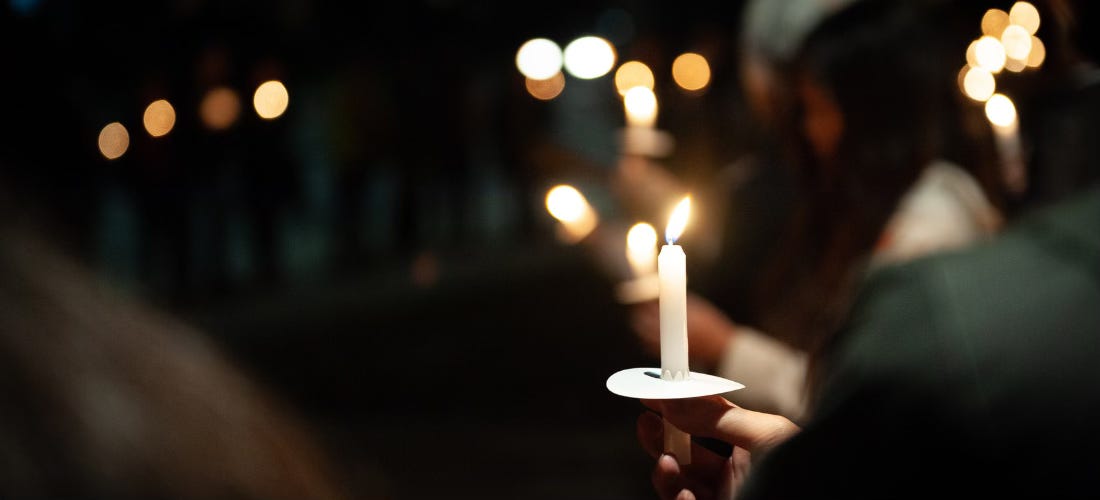
I remember the exact moment I saw the footage of the planes flying into the twin towers on September 11, 2001, like it was yesterday. Four months pregnant with my oldest son, I watched the world freeze in shock. Life as we knew it changed forever. On December 14, 2025, the Bondi Beach mass shooting became another marker etched into humanity’s historical timeline: an ISIS-inspired terrorist attack that claimed 15 lives during a Hanukkah celebration and shattered our sense of safety.
Society’s Trauma Response
Ten days later, Australia’s reactions reflect the classic trauma responses: fight (anger and calls for tougher laws), flight (avoidance of hard conversations), fawn (over-accommodation), and freeze (paralysis amid grief). Yet finger-pointing obscures a deeper issue: a growing vacuum in our collective understanding of diverse worldviews. What is urgently needed is open, respectful dialogue about religion and belief, beginning with early education.
The Growing Vacuum in Religious Understanding
Australia’s public education system prioritises secularism, as reaffirmed in legislation such as Victoria’s Education and Training Reform Act 2006. Yet in the pursuit of being post-Christian, or even aggressively neutral, religious literacy among young Australians has declined sharply. The 2021 Census shows “no religion” at nearly 39% overall, with more than 40% of those under 35 identifying this way.
In practice, this secular caution has often meant that Christianity, once foundational to Australia’s cultural story, is no longer explained even from a historical perspective. Christmas carols are rarely taught, and the meaning of Christian festivals is frequently omitted altogether. Ironically, it now appears “safer” for schools to teach about Diwali, host cultural celebrations, or invite yoga instructors into classrooms than to provide balanced education about all world religions. The result is not neutrality, but selective silence.
This decline is compounded by reduced emphasis on humanities subjects such as philosophy and comparative religion. “Neutral” values education has sometimes filled the gap with secular or New Age approaches, but without sufficient context or depth, or providing a disclaimer that will allow parents and students to opt in or out. At the same time, migration has significantly enriched Australia’s religious landscape, with strong affiliations to Hinduism, Islam, Buddhism, Sikhism, and Christianity among recent arrivals. Within all worldviews, however, there exists a wide spectrum, from merely cultural affiliation to extreme expressions.
Extremism is not driven by demographics alone. Rather, isolation, misunderstanding, and the absence of constructive engagement create conditions in which radicalisation can take root. Safe, inclusive spaces for exploring belief and meaning can help bridge these gaps.
Toward a Shared Wisdom
The truth is that most people on earth want to live a good life, one of peace and prosperity. On top of that, when tragedy strikes most people stand together, and help irrespective of worldview or social standing.
So what if, at the very least, our reaction after the Bondi shooting is to stand together to build a common ethical foundation where “people like us do things like this” reflects truly shared values?
We often assume universal agreement on abstract concepts such as “kindness,” “respect,” “humility,” or “freedom,” but their meanings differ profoundly across cultures and religions.
For instance, humility in some Eastern traditions might emphasise self-effacement and harmony with the group, while within a Christian worldview it centres on recognising one’s dependence on God. Freedom in one worldview might prioritise individual rights and self-expression; in another, it may mean liberation from desire or submission to divine will. Without open discussion, these differences can breed suspicion rather than understanding.
Many major religions, however, share roots in ancient wisdom traditions, with overlapping teachings, such as the Golden Rule echoed in Judaism and Christianity: “Treat others as you would like to be treated.”
Facilitated discussions on comparative religion and ethics in schools would not be indoctrination, but education. Such spaces expose ideas to scrutiny, build empathy, and help identify early warning signs of extremism, leaving no shadows for distorted doctrines to hide. There is no place in Australia for beliefs that justify hatred or violence, regardless of worldview, particularly those linked to organised Dawah movements and antisemitic preaching.
A Call to Light
The Bondi tragedy exposed painful divides, including resurgent antisemitism and a broader onslaught on democratic freedoms. Tighter gun reform laws, public vigils, or the comforting Australian belief that “she’ll be right, mate” will not be enough to curb this threat. Only through courageous dialogue, shining a light on hidden and inhumane beliefs, can we achieve lasting impact. This will help cement Australian values and make place for all Australians to call this land home. There should be no fear in dialogue that fosters cultural humility and shared humanity, because true light always shines through, exposing darkness; fostering genuine understanding.
This season of light, let us not respond with fear, but with illumination. Let us mourn with those who mourn, and advocate for curriculum enhancements in religious literacy and interfaith understanding so that the cycle of antisemitism stops here.